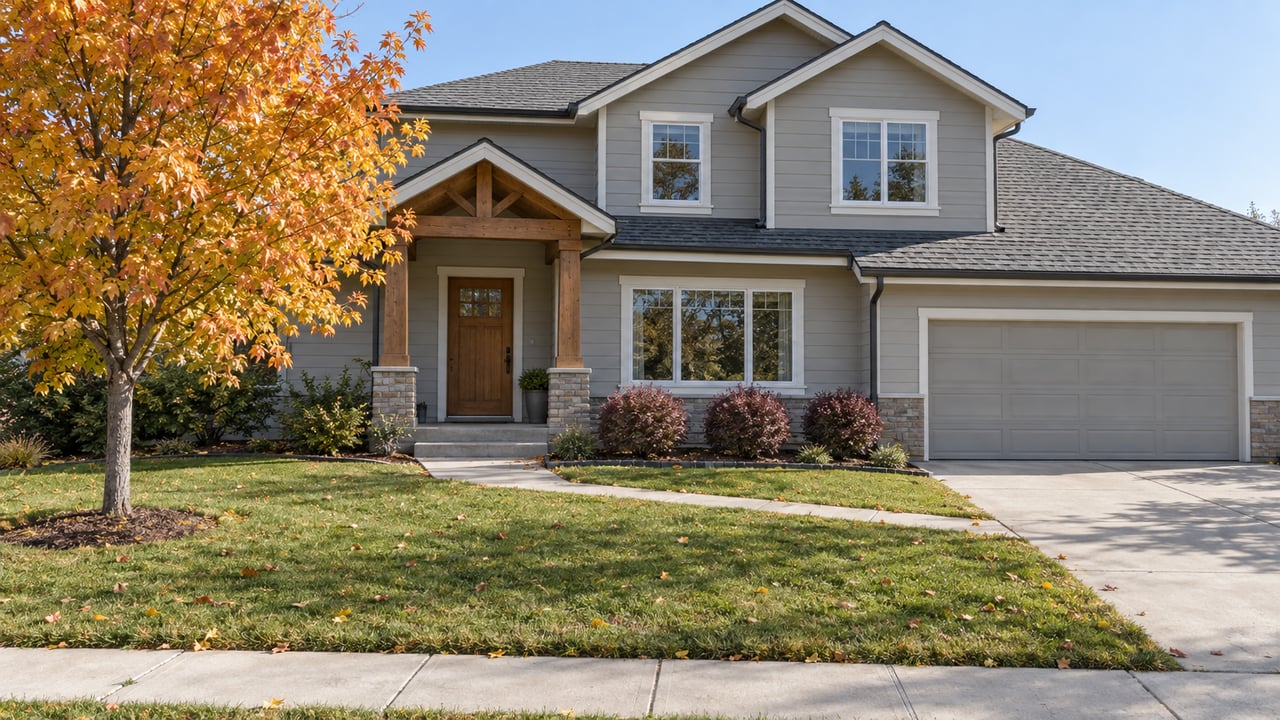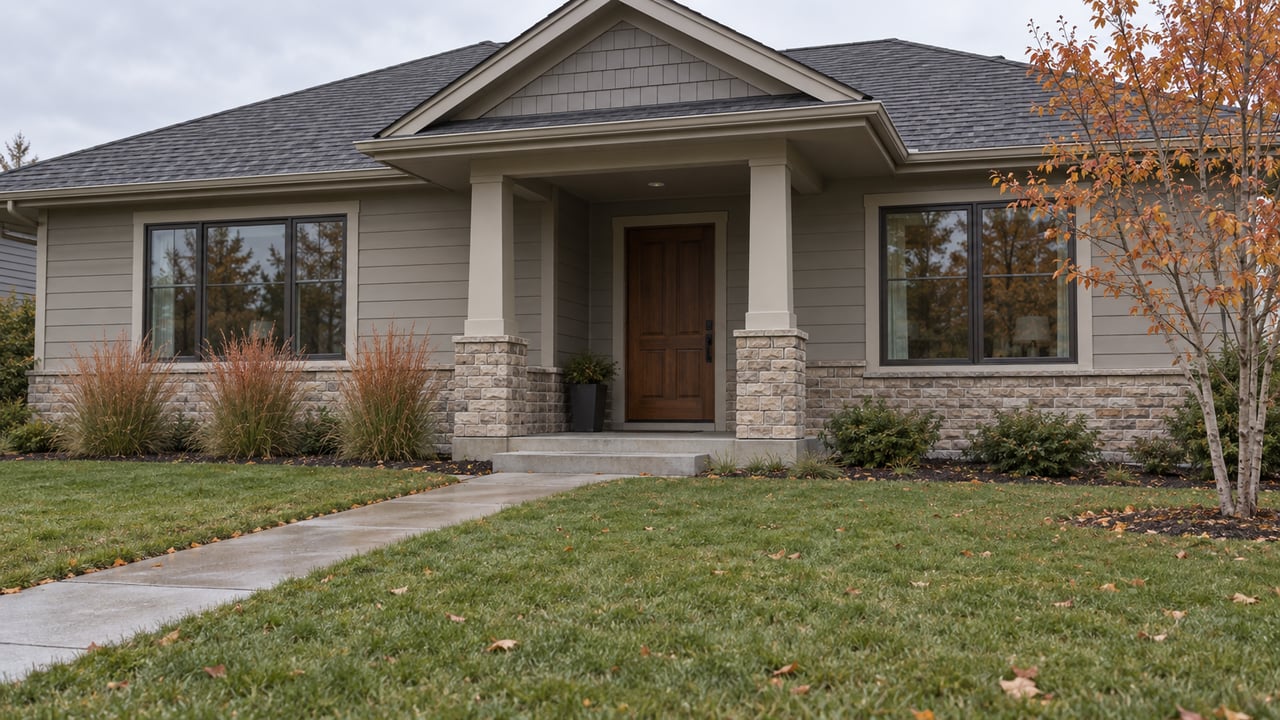
A house in Boise's North End goes under contract in 9 days right now, as of the three months ending June 2026, at a median price of $825,000. That is up 10.7 percent from the same period a year earlier, and the price per square foot, $482, is up 7.5 percent over the same window. Fifty-five homes closed in June alone, up from 42 the year before. By any normal reading, that is a hot, confident market.
Here is what that speed and that premium are not paying for: updated electrical panels, repiped plumbing, or a fast path to fixing either one. Several Treasure Valley market analyses this year have landed on the same read of the North End specifically: the premium tracks the trees, the sidewalks, and the walk to downtown, not the condition of what is behind the plaster. The bungalows and Craftsman-style homes that anchor this premium were largely built before 1940, and many still carry the wiring and plumbing choices of that era. The gap between what the price buys and what the price implies is the thing worth understanding before you write an offer, not after your inspector leaves.
What the Disclosure Form Actually Promises You
Idaho's Property Condition Disclosure Act, codified at Idaho Code 55-2501 and following, requires sellers to complete a disclosure form describing defects they actually know about. It does not require them to hire an inspector, and the form itself states plainly that the seller has no greater knowledge of the property than a buyer would get from a careful inspection, and has not checked inaccessible areas like the foundation or roof. That is a reasonable standard for most housing stock. It is a thinner standard for a home where the wiring in the attic dates to one decade, the wiring in the kitchen dates to another, and nobody currently living there installed either.
Boise home inspectors report this pattern regularly in the city's older neighborhoods: knob-and-tube wiring, aluminum branch wiring, overloaded panels, and DIY additions layered on top of each other over decades. Plumbers who work the North End specifically point to the same short list on nearly every service call: galvanized pipe corrosion that shows up as low water pressure and rusty water, and cast iron drain pipe deterioration in homes built before 1950. None of this makes a seller dishonest. A homeowner who has lived in a 1920s bungalow for fifteen years may genuinely not know their attic still has live knob-and-tube circuits behind the insulation, because nobody has opened that wall since Eisenhower was president. That is exactly why the disclosure form and the inspection report tend to tell two different stories in this part of Boise, and why a 9-day close leaves less time than usual to reconcile them.
Active knob-and-tube wiring is also a coverage issue with some homeowner's insurance carriers, not just a maintenance item, which means it can affect your closing timeline directly if a lender or insurer wants it addressed before or shortly after you take title.
Historic District Review and Home-System Work
Say the inspection turns up exactly what the pattern predicts: mixed-era wiring, a galvanized supply line, maybe both. In most of Boise, the next step is straightforward. You pull a permit, hire a licensed electrician or plumber, and get it corrected.
In Boise's historic districts, whether a project needs that review depends on its scope. Any exterior change to a home in one of Boise's ten historic districts, and in some cases changes tied to interior systems work that affects the exterior, requires a Certificate of Appropriateness from the city's Historic Preservation Commission before a building permit is issued at all. The city lists examples of work that may require this review:
| Work that typically requires a Certificate of Appropriateness |
|---|
| Removing a tree |
| Installing a non-wood fence |
| Replacing windows |
| Building an addition, porch, or deck |
| Demolition of any structure |
A straightforward rewire that stays entirely inside existing walls generally will not trigger this review. But the kind of work that often accompanies a rewire or repipe in a century-old house, opening walls, replacing windows damaged during the work, adding a vent or meter that changes the exterior, can. The Historic Preservation Commission meets once a month, and projects that need its review take longer than a standard permit. Room additions and new accessory dwelling units already run 3 to 6 weeks for plan review in Boise under normal conditions. Add historic district review and the timeline stretches further. A full rewire of a 1,200 to 1,800 square foot home runs $12,000 to $25,000, and permit fees for older-home projects in Boise typically land between $500 and $3,000 depending on scope, before you have paid a contractor to actually touch a wire.
The North End Neighborhood Association runs its own Historic Preservation Committee specifically to help homeowners navigate this, and its volunteers will talk through a Certificate of Appropriateness application before you submit one, which can save a failed application and a second round of review. That is a genuinely useful local resource.
The Trade That Makes the Premium Make Sense
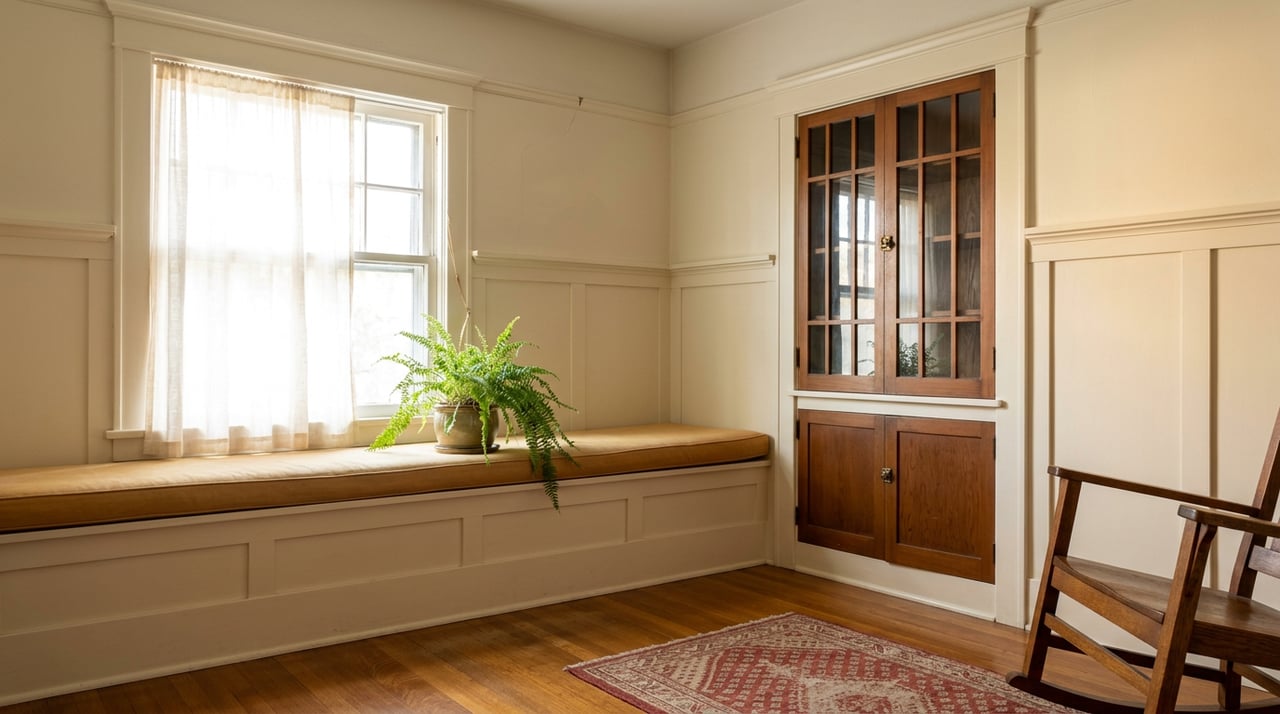
None of this means the North End premium is a bad trade. It means the trade is different from what the price tag alone suggests. The same historic district rules that slow down a rewire are the rules protecting the original fir floors, built-in cabinetry, and window trim that give these homes their resale edge in the first place. Local renovation guidance for Boise's historic stock puts a real number on that edge: a North End Craftsman with original fir floors and intact built-ins commands $30 to $60 more per square foot than a comparable home where those features were stripped out in a prior remodel. The Central Bench, by contrast, holds a mix of 1940s and 1950s ranch and post-war homes with simpler layouts and fewer of these protected features, and correspondingly fewer design review requirements standing between a buyer and a renovation permit.
So the premium buys two things at once. It buys proximity, trees, and architectural character that the market is currently rewarding at nearly 11 percent year over year growth. And it buys a slower, more procedural path to bringing the home's hidden systems up to current standards, one that most other Treasure Valley neighborhoods simply do not require.
The Rulebook Is Being Rewritten Right Now
As BoiseDev reported, the City of Boise is updating its Historic Preservation Plan for the first time in nearly 50 years. The city hired the consulting firm Northwest Vernacular in the fall of 2025, coordinated the work with the Idaho State Historic Preservation Office, and ran a public survey on residents' perceptions of preservation from January through June 10, 2026. A draft plan went public in June, with open houses held July 28 at the library branch at Cole and Ustick and July 29 at the Boise Depot.
The draft is candid about what is not working. It names "demolition by neglect," where buildings in historic areas deteriorate from lack of maintenance, as an active threat. It also names the public perception of historic preservation as a barrier to housing affordability as a threat worth addressing directly. And it flags that the city's historic preservation ordinance language is currently scattered throughout the zoning code rather than collected in one place, which the plan itself calls a weakness.
The proposed fixes matter more to a North End buyer than almost anything else in this piece, because they would change the math above. Among the mid-term action items in the draft: streamlined permitting, fee waivers, zoning and building code allowances, and tax credits to support private investment in historic building reuse. If those incentives are adopted, the cost and timeline gap between a North End rewire and a Central Bench rewire could shrink. If the plan stalls, the gap holds where it is today.
That is not a detail to file away for later. Anyone buying a North End property with plans to renovate in the next two to three years is buying into a regulatory environment that is actively being redrawn, not a fixed one.
Quick Answers
Does a rewire or repipe always require a Certificate of Appropriateness? Not if the work stays inside existing walls and does not change the exterior. It becomes a factor when the project touches windows, additions, decks, fences, or anything visible from the street.
Will the seller's disclosure form catch wiring and plumbing issues? Only if the seller actually knows about them. The form does not require an inspection, and multi-era wiring hidden inside walls of a home built before 1940 is exactly the kind of thing a seller can honestly not know exists.
Where do I check if a specific address is inside a historic district? The City of Boise maintains an interactive map where you can enter an address and see whether it falls inside one of the city's ten historic districts, which determines whether Certificate of Appropriateness review applies.
The North End's speed and its premium are real, and buyers planning wiring or plumbing work should also consider whether their project may require historic-district review. Understanding both the home's systems and whether planned work may require review changes how you write the offer, how you budget the first year, and how closely you should be watching a preservation plan that has not been rewritten in half a century. If you are weighing a North End purchase against a home elsewhere in the Treasure Valley, Valentine Realty can walk through what a specific address actually requires before you're competing for it. Work With Us.
This article is general information, not legal, tax or financial advice. Consult a qualified professional about your situation.