Fruitland has an Idaho ZIP code, a Treasure Valley address, and a housing stock that looks, at a glance, like a smaller version of Meridian or Star. Look at the numbers for more than a minute and a different picture appears. The market clears more slowly, prices are softer year over year, and the demand engine underneath is not Boise tech commuting. It is healthcare, agriculture, and an Oregon border 50 miles from the state capital.
That mismatch is the whole story. If you are comparing Fruitland to the metro core with the same mental model you used for Eagle or Kuna, you are pricing the wrong market. Here is what to reset before you tour.
The address is Idaho. The market is Ontario.
Fruitland sits along U.S. 95 in Payette County, about 50 miles west of Boise on the Oregon border. It is part of the Ontario, OR micropolitan area, not the Boise metropolitan statistical area. That single classification quietly changes almost every assumption a Treasure Valley buyer arrives with.
The demand engine here has been anchored, in recent decades, by the arrival of the St. Alphonsus Fruitland Health Plaza and St. Luke's Fruitland Medical Plaza, along with light manufacturing and long-standing agriculture. Growth is real, but it is not the same growth that shaped Meridian's last decade. The buyers competing for Fruitland inventory are often relocating within Payette and Malheur counties, moving off acreage, or following a medical-district job. Fewer of them are chasing a Boise commute.
What the numbers say when you line them up
The most current view of the Fruitland market comes from rolling three-month data through May 2026, which shows a market that has grown only modestly year over year and gives sellers meaningful but not overwhelming leverage.
| Metric (Fruitland, rolling 3-mo through May 2026 unless noted) | Value |
|---|---|
| Median sale price (Mar 2026, YoY) | ~$365,500, down ~6.3% |
| Median list price (April 2026) | ~$429,000 |
| Median days on market | ~45 |
| Homes under contract within two weeks | ~42% |
| Average sale-to-list ratio | ~99% |
| Homes selling above asking | ~23% |
Read those rows together and the picture is specific. A median list near $429K sitting above a median sale near $365K is not a rounding error. It is a spread. Well-priced homes still move, with roughly 42 percent going pending inside two weeks, but the tail of the market takes a month and a half to clear at prices below what sellers first ask.
Compare that to how the core Treasure Valley usually behaves, where days-on-market runs tighter and sale-to-list sits closer to par for prepared listings. In Fruitland, the same asking-price mistake costs more time and more dollars off the top.
What ~$429K actually buys here
The listing mix in Fruitland is the other half of the story. The city's inventory is not the tight suburban lot you get for the same money in central Meridian. It leans toward:
- Newer subdivision homes on generous lots in developments like River's Edge, Northview Ranch, Zellers Crossing, and Crestview, some within minutes of the Snake River
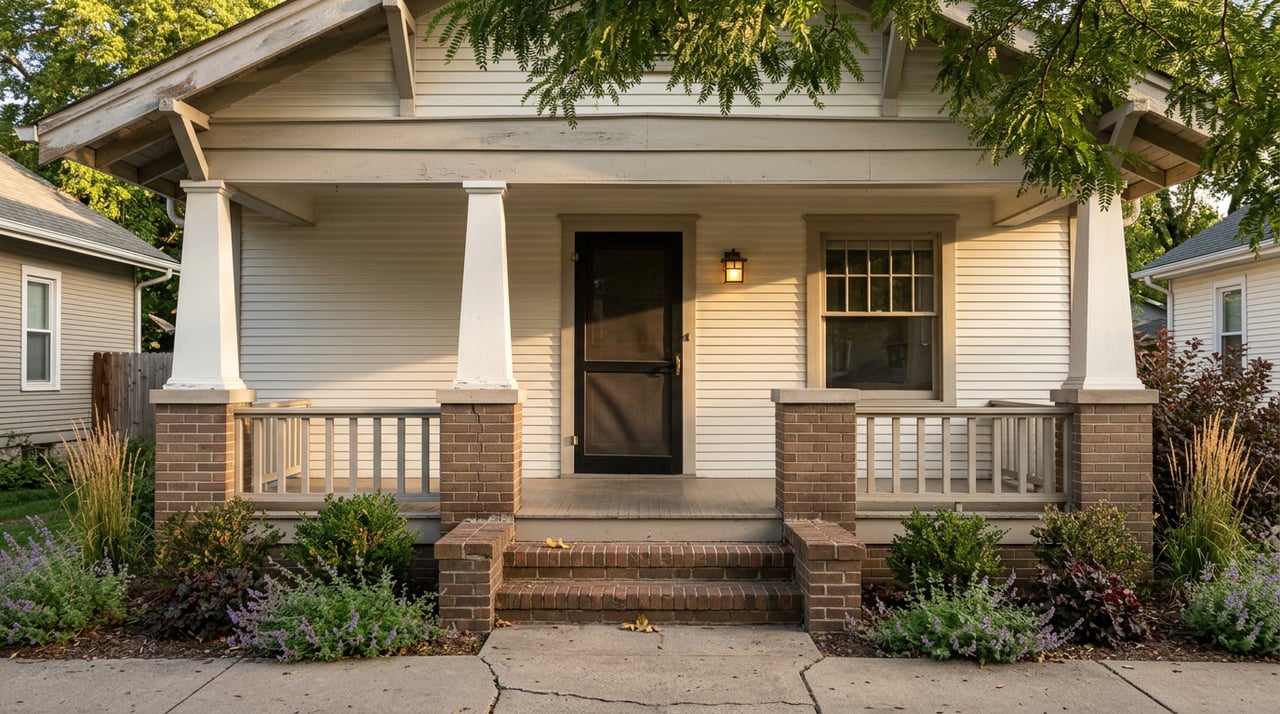
- Older in-town bungalows and Craftsman-era homes near downtown and the Fruitland School District campus
- Small-acreage properties on the edges of town, often with irrigation shares, outbuildings, or leased farm ground
- Occasional custom river-view builds pushing above $600K, with a long tail of land parcels that carry building rights and existing well/septic
The practical translation: your budget in Fruitland is more likely to buy square footage, a third garage bay, or a fenced acre than proximity to a walkable retail node. Buyers moving from Meridian who prioritized new construction and HOA amenities will find that trade obvious. Buyers moving from a Boise foothills neighborhood who valued walkability and dining density will feel the trade as a loss until they recalibrate.
Where the leverage lives
The friction to plan around is the list-to-sale gap. On a home listed at $429K that ultimately sells near $365K, the delta is about $64K. Not every home shows that spread, but the average sale-to-list of roughly 99 percent tells you the compression happens through price reductions before the offer, not concessions at the table. Watch the price-cut history on any active listing. In Fruitland it is the single best indicator of a seller's real reservation price.
A few practical implications for a buyer working from the metro core:
- Bring a lender who understands rural and small-acreage appraisals. Homes on a half acre with outbuildings, or parcels straddling city and county jurisdiction, appraise on a smaller comp pool than a Meridian subdivision. A lender used to only tract product can miss the mark on value and timeline.
- Ask which side of the city limit the parcel sits on. Payette County and the City of Fruitland administer land use separately, and lot-size minimums, building rights, and utility hookups differ. Some listings explicitly direct buyers to call Payette County Planning and Zoning for lot-size confirmation, which is a signal, not a footnote.
- Confirm water. Irrigation shares (Noble Ditch, Black Canyon Irrigation) and water rights on acreage parcels have real dollar value and can transfer separately from the deed. On in-town lots, verify city water and sewer availability rather than assuming it based on the address.
For sellers, the same data reads differently. With about 23 percent of homes selling above asking, well-prepared listings still find competing offers. The rest of the market rewards a realistic list price on day one over a hopeful one you cut in month two.
Three subdivisions worth knowing before you tour
River's Edge
Newer construction on the west side, close to the Snake River and the Oregon line. Floor plans from builders like Agile Homes come in around three bedrooms, split-bedroom layouts, quartz counters, and three-car garages on lots in the .25 to .35 acre range. This is the closest Fruitland gets to a Meridian-style new-build experience.
Northview Ranch
North-side subdivision that fills the space between in-town Fruitland and the more rural county parcels. A common landing spot for buyers who want a newer home without an acre of maintenance.
Zellers Crossing
Called out in the city's own downtown planning documents as a redevelopment focus area. Buyers here are effectively betting on the second phase of downtown enhancement rather than the completed product.
Older-grid buyers should also look at the blocks around Pennsylvania Avenue and Southwest 3rd Street, where the city's downtown plan concentrates its streetscape and parking investment.
The daily-life math
Fruitland is not trying to be Meridian, and the amenities reflect that. Mesa Park carries the baseball, basketball, and tennis load. Crestview Park handles playgrounds and picnic shelters. Fruitland Community Park and the Payette River Greenbelt cover the walking-and-water side. The Fruitland Public Library runs year-round public programs, and the Fruitland School District's Friday-night football is the closest thing the town has to a shared calendar. The annual Family Fun Day in September pulls the whole community downtown.
Ontario, Oregon sits across the Snake River bridge. That matters for retail, restaurants, and the Four Rivers Cultural Center, and it matters for the household budget in ways buyers new to the border learn quickly. Boise is roughly an hour southeast on I-84.
FAQ
Is Fruitland's price drop a warning sign?
The roughly 6.3 percent year-over-year decline in median sale price through March 2026 is real, but it is measured against a small monthly sample in a town of about 6,000 people. A handful of high-end sales in either direction swings the median. The more useful read is the 45-day median days-on-market and the sale-to-list ratio near 99 percent, which together describe a market that is pricing-sensitive rather than falling.
Why is the median list price so much higher than the median sale price?
Two reasons. First, Fruitland's listing mix includes a long tail of custom river-view and acreage properties that carry aspirational list prices and often sit before reducing. Second, the town's slower absorption gives sellers more room to test a number before the market answers. Buyers should read price history, not just current list.
Does buying in Fruitland instead of Meridian cost me on resale?
It changes the resale profile rather than automatically hurting it. Fruitland homes appreciate on a different cycle than the Boise MSA, tied more closely to Payette and Malheur county employment and to healthcare expansion than to Boise-area job growth. A five-year hold looks different here than in Meridian, and a good agent should model that explicitly rather than borrowing a metro-core assumption.
If you are weighing Fruitland against Meridian, Eagle, or the Boise foothills, the right comparison is not price per square foot. It is which market's demand engine matches the life you are actually building. Valentine Realty works across the full Treasure Valley and is happy to run the math with you before you write an offer. Work With Us when you are ready to price the trade honestly.