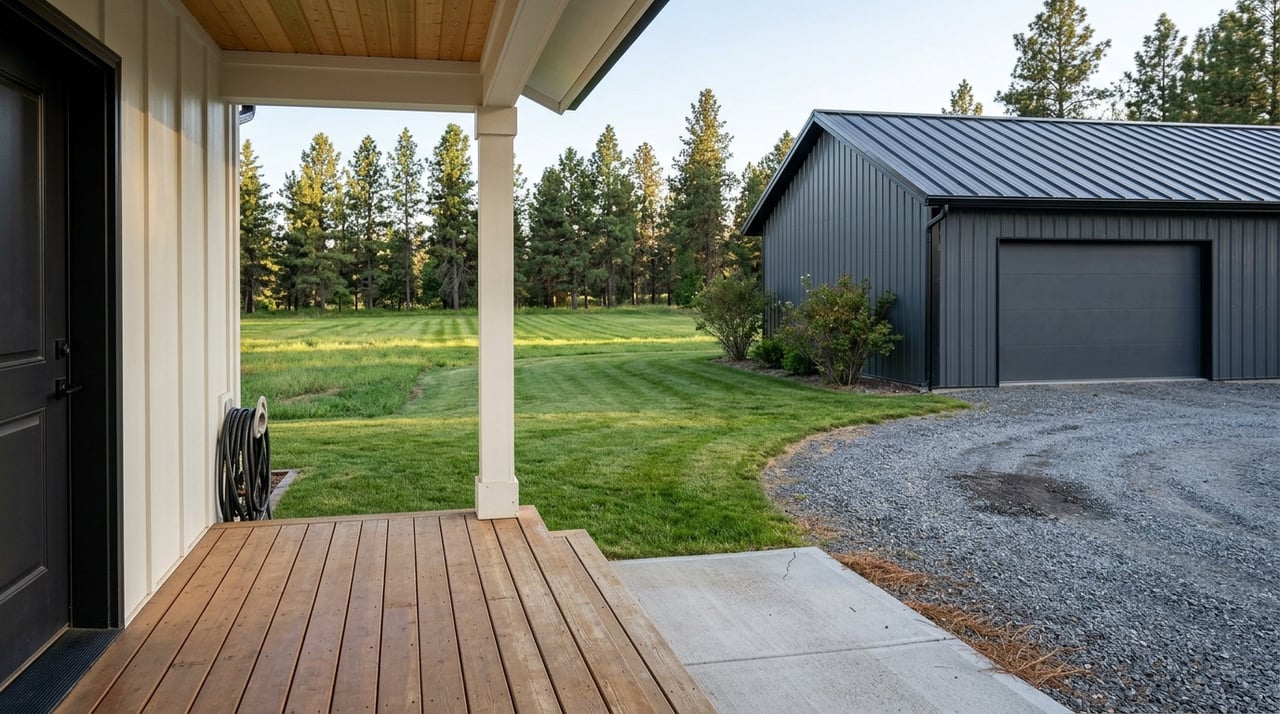
Are you dreaming about a few acres, a shop, maybe some irrigation water, or a property that can support both your lifestyle and your long-term financial goals? If you are looking at Weiser, you are probably weighing more than just the house itself. You want to know whether the land works, whether the numbers make sense, and whether the property will still be a smart move years from now. This is where a careful plan matters most. Let’s dive in.
Why Weiser appeals to acreage buyers
Weiser offers a different kind of opportunity than the larger Treasure Valley cities. The U.S. Census Bureau estimates 6,112 residents and 2,290 households in 2024, which makes this a much smaller market than Boise, Meridian, or Nampa. That smaller scale often attracts buyers who care more about land use, flexibility, and day-to-day utility than urban rent growth alone.
It also helps that the price picture is different. Census data shows a median owner-occupied home value of $223,400 in Weiser, with median gross rent of $927. For buyers comparing options across the region, that can make Weiser feel more approachable when you want room for equipment, animals, gardens, or a hobby-farm setup.
Why investors look at Weiser differently
From an investment angle, Weiser can look surprisingly strong on paper. Using Census median rent and value figures as a rough gross-yield proxy, Weiser comes in around 5.0% annual gross rent-to-value, compared with about 3.6% in Boise, 4.1% in Meridian, and 4.6% in Nampa. That does not mean your true return will match that number, but it does explain why smaller markets get attention.
The catch is that a rough yield number is only the starting point. It does not include taxes, insurance, vacancy, repairs, management, or added rural costs like well, septic, and land maintenance. In a market like Weiser, the property’s infrastructure and legal setup can affect your outcome just as much as the purchase price.
Land use matters more than price per acre
In Weiser, acreage value is closely tied to how the parcel can actually be used. Idaho DEQ describes the Weiser River subbasin as a landscape with dryland and irrigated agriculture, range, forest, riparian areas, and open water. That mix supports the kind of rural and semi-rural ownership many buyers want, but it also means each parcel needs a closer look.
University of Idaho Extension notes that small-acreage ownership often involves practical issues like soil, water, water rights, livestock, weeds, and wildfire. In other words, buying acreage is not just buying extra elbow room. You are taking on systems, land management, and sometimes responsibilities that do not come with a standard house-in-town purchase.
What Weiser zoning can mean for you
If a property is inside city limits, zoning is one of the first things to review. Weiser’s Agricultural Residential, or AR, district is especially important for acreage buyers because it is built for larger-lot rural-style use. According to city code, allowed uses in AR include single-family dwellings, two-family dwellings, accessory buildings, agricultural uses other than CAFOs, customary home occupations, and city utilities or public-service uses.
That flexibility can be helpful, but there are still limits. In the AR district, the minimum lot area is five acres, the minimum width is 75 feet, and setbacks are 30 feet in the front and rear and 15 feet on the sides. The city code also states that no structure may be placed in a recorded utility easement, which is why usable building area matters more than the total number of acres on paper.
Conditional uses need extra review
Not every use is automatically allowed. The city code says conditional uses are discretionary and require notice and a public hearing. If you are buying with a specific plan in mind, it is important to confirm whether that use is permitted outright or would need additional approval.
Parcels outside city limits can be more complex
For land outside the city, jurisdiction can change the entire process. Weiser’s code defines an area of impact contiguous to the city limits, and Washington County Planning handles rezones, variances, special use permits, subdivisions, and questions about available residential dwelling permits or parcel splits. That means a county parcel may need a different due-diligence path than a property inside the city.
Washington County also states that buyers must provide their own original-parcel deed research, including a chain of ownership back to April 9, 1979, or hire a title company to do it. That is a major detail for buyers who assume split potential will be easy to confirm. Before you count on future development or added homesites, make sure the parcel history supports it.
Water rights can make or break acreage value
In rural Idaho, water is never a small detail. The Idaho Department of Water Resources explains that a water right is a real property right tied to beneficial use, and priority matters because senior rights are satisfied first during shortages. The same IDWR guidance notes that a water right can be lost if it is not used for a continuous five-year period.
That matters if you are buying for irrigation, animals, or small-scale agricultural use. It is not enough to hear that a property has water. You need to understand the right itself, how it has been used, and whether your intended use matches what is legally in place.
Irrigation access needs documentation
IDWR’s active irrigation-organization list includes East Weiser Irrigation District, Little Weiser Irrigation District, Weiser Irrigation District, and Weiser City Ditch & Irrigation Co. For a buyer, the key questions are practical. Does the parcel have documented irrigation delivery, ditch access, and any easement or membership rights tied to that water source?
If your plan depends on pasture, crops, landscaping, or a hobby-farm setup, this paperwork deserves serious attention before closing. Water access that looks obvious on a map is not the same as documented legal access and usable delivery.
Wells and septic need early attention
Private wells and septic systems are central to many acreage purchases in Weiser. Idaho Department of Health and Welfare says groundwater from private wells is not regulated by the state and encourages regular testing. That means a buyer should treat water quality as an active due-diligence item, not a box to check after move-in.
Septic also deserves a close look. Idaho DEQ says septic design and sizing vary based on soil type, slope, proximity to water bodies, facility type, and local rules. DEQ also warns that systems that are not properly designed, located, constructed, and maintained can contaminate groundwater.
Rural systems affect both cost and use
University of Idaho Extension points out that many landowners have never had to manage a well or septic system before. On an acreage purchase, that learning curve can become expensive if records are missing or system condition is unknown. Well testing, septic records, drainage patterns, and repair history should all be part of your evaluation.
If you are buying with an investor mindset, these systems also affect cash flow. A property with uncertain well output or an aging septic setup may carry more risk and future expense than a simple rent estimate suggests.
Older rural homes can hide costly issues
Many acreage properties include older homes, barns, outbuildings, or additions. Idaho DHW says mold problems happen when there is too much moisture from leaks or condensation, and recommends fixing leaks promptly and improving insulation and ventilation in crawl spaces and attics. That makes moisture one of the first things to watch during inspections.
Lead can also be part of the picture. Idaho DHW says homes and buildings built before 1978 are more likely to contain lead-based paint, and Idaho DEQ notes that older plumbing, fixtures, and solder can contain lead. If a home has been cosmetically updated, it is still wise to understand what may be behind the finishes.
Site layout matters for water quality
University of Idaho Extension notes that rural nitrogen sources can include fertilizers, septic systems, livestock feedlots, barnyards, and certain agricultural practices. On acreage, spacing between wells, drainfields, and animal areas matters. That is one more reason to look at the full site plan, not just the home itself.
How to evaluate Weiser investment property
If you are buying for income, Weiser can offer a different risk-reward balance than larger Treasure Valley cities. The rough gross-yield math may look stronger, but the tenant pool is typically narrower and sales volume thinner because the market is smaller. That does not make Weiser a weak investment market, but it does mean you should underwrite conservatively.
A smart evaluation usually includes:
- Purchase price relative to condition
- Zoning and allowed uses
- Water rights and irrigation documentation
- Well and septic condition
- Repair and maintenance needs
- Vacancy and management assumptions
- Resale flexibility in a smaller market
In Weiser, land utility and infrastructure often matter as much as the house itself. A property with clear water documentation, functional systems, and usable acreage may outperform a cheaper parcel with unresolved questions.
A practical buying strategy for Weiser acreage
The best acreage purchases usually come from slowing down and asking better questions early. That means confirming zoning, checking parcel history when needed, reviewing irrigation and water-right documentation, and investigating wells, septic, and drainage before you get too far down the road. It also means looking at the property through both a lifestyle lens and a financial lens.
That is especially true if you want the property to serve more than one purpose. Maybe you want a home now, room for projects later, and solid resale potential over time. In Weiser, that kind of long-term value often comes from buying the right setup, not just buying the lowest price per acre.
When you approach the process carefully, Weiser can offer real opportunity for buyers who want space, utility, and a more grounded path into acreage or investment ownership. If you want help evaluating a property with both condition and long-term value in mind, Valentine Realty is here to help.
FAQs
What should you check first when buying acreage in Weiser?
- Start with zoning, water rights, irrigation access, well information, septic records, and parcel history if the land is outside city limits.
How does Weiser zoning affect acreage property use?
- In Weiser’s Agricultural Residential district, uses like single-family dwellings, two-family dwellings, accessory buildings, and agricultural uses other than CAFOs are allowed, but lot size, setbacks, easements, and conditional-use rules still apply.
Why are water rights important for Weiser acreage?
- Idaho water rights are tied to beneficial use and priority date, so you need to verify that a property has documented rights or irrigation access that support your intended use.
What well and septic issues matter on Weiser rural property?
- You should review water testing, system records, drainage, soil considerations, and overall condition because private wells are not state regulated for ongoing quality and septic systems must fit site conditions.
Is Weiser a good place to buy investment property?
- Weiser can look attractive based on rough rent-to-value comparisons, but your real performance depends on expenses, condition, infrastructure, vacancy, management, and how easy the property will be to resell in a smaller market.